• Why Gen Z Is Drinking Less in 2026 and What It Reveals About Anxiety Habits Like Nail Biting

    TL;DR

    Gen Z isn’t drinking less because of trends or rules. They’re doing it because they’re tired of feeling anxious, overwhelmed, and out of control. That same reason explains why habits like nail biting are finally being taken seriously. Both are quiet stress responses. When we understand that, real change becomes possible.

    A Quiet Moment Most People Recognize Instantly

    It usually doesn’t happen during a crisis.

    You’re not panicking.
    You’re not having a bad day.

    You might be answering emails, watching a show, or lying in bed scrolling your phone. Then suddenly you notice your fingers are in your mouth again. Your nails feel rough. One of them hurts a little.

    You didn’t plan to bite your nails. You didn’t even realize you started.

    For many people, this moment is followed by frustration or shame. “Why do I keep doing this?” “I told myself I would stop.” “What’s wrong with me?”

    At the same time, more young people are asking similar questions about alcohol. Why does a night of drinking feel less fun and more draining now? Why does it increase anxiety instead of relieving it?

    These questions are connected, even if they don’t look like it at first.

    Gen Z Is Re-thinking Automatic Coping Habits

    Gen Z grew up in a world that never really slows down. Constant notifications, social pressure, financial uncertainty, and a nonstop comparison culture create a baseline level of stress that older generations didn’t experience in the same way.

    So when something makes that stress worse, it stands out quickly.

    Alcohol used to be an easy escape. For many Gen Z adults, it now feels like a shortcut to anxiety, poor sleep, and emotional crashes the next day. That’s why drinking less isn’t about being strict or moral. It’s about protecting mental space.

    Nail biting follows the same logic. It’s not a random bad habit. It’s something the body learned because it works, at least for a moment. It lowers tension just enough to feel relief.

    The problem is not the person.
    The problem is the habit loop.

    Nail Biting Is a Nervous System Response, Not a Personality Flaw

    Most nail biters don’t bite because they want to damage their nails. They do it because their nervous system is looking for regulation.

    Stress, boredom, focus, social discomfort, even excitement can trigger it. Your hands move before your brain has time to stop them.

    This is why willpower alone rarely works. Telling yourself to “just stop” ignores what’s actually happening in your body.

    Gen Z understands this intuitively. That’s why they’re drawn to mindfulness, therapy language, and habit tracking. They want to understand their reactions, not punish themselves for them.

    Drinking less fits into this same mindset. Instead of asking “Why can’t I handle this?” the question becomes “Why does this make me feel worse?”

    What Drinking Less Teaches Us About Breaking Nail Biting

    One reason Gen Z is successful at cutting back on alcohol is that they don’t expect perfection. Many start by noticing patterns instead of forcing change.

    When do I drink?
    Why do I reach for it?
    How do I feel afterward?

    That awareness alone often reduces the behavior.

    The same approach works with nail biting. When you start noticing when it happens, what you’re feeling, and what you’re avoiding in that moment, the habit slowly loses its power.

    Change doesn’t come from control.
    It comes from understanding.

    Mindful Living Is About Small, Everyday Choices

    Mindful living isn’t only about meditation or big lifestyle changes. For Gen Z, it shows up in small moments. Choosing not to drink on a random weeknight. Pausing before reacting to stress. Paying attention to habits that once felt automatic.

    Nail biting fits perfectly into this picture. It’s a small habit, but it carries emotional weight. It affects confidence, appearance, and how people feel about themselves.

    Addressing it becomes part of a larger decision: “I want to feel calmer in my own body.”

    Why Gentle Tools Work Better Than Shame

    One reason so many people struggle with nail biting is that most advice is based on guilt. Cover your nails. Scold yourself. Hide your hands.

    Gen Z rejects that approach. Shame doesn’t create calm. It creates more stress, which makes the habit worse.

    That’s why supportive tools matter. Tools that help you notice patterns without judgment. Tools that remind you gently instead of punishing you.

    This is where habit awareness becomes powerful. Not as pressure, but as companionship.

    Nail Biting Is a Message, Not a Failure

    When Gen Z drinks less, they’re listening to what their body is telling them. Nail biting deserves the same respect.

    It’s your body saying, “I need comfort.”
    “I need grounding.”
    “I need a pause.”

    You don’t fix that by being harder on yourself. You fix it by learning how to respond with calm.

    Final Thoughts: Calm Is the New Goal

    Gen Z isn’t trying to be perfect. They’re trying to feel steady.

    Drinking less. Paying attention to stress habits. Choosing awareness over avoidance. These aren’t trends. They’re survival skills in a loud world.

    If you bite your nails, you’re not behind. You’re paying attention.

    And that’s where change begins.

    FAQs

    Is nail biting really linked to anxiety?

    Yes. For many people, nail biting is a subconscious way to regulate stress, focus, or emotional discomfort.

    Why is Gen Z drinking less alcohol?

    Because many notice it increases anxiety, disrupts sleep, and doesn’t support the life they want to build.

    Can awareness actually help stop nail biting?

    Absolutely. Awareness breaks the automatic habit loop and creates space for choice.

    Do I need to quit nail biting all at once?

    No. Progress comes from noticing patterns and reducing frequency over time, not perfection.

    You may also find this helpful and interesting:  Why Nail Biting Increases When You’re “Productive”
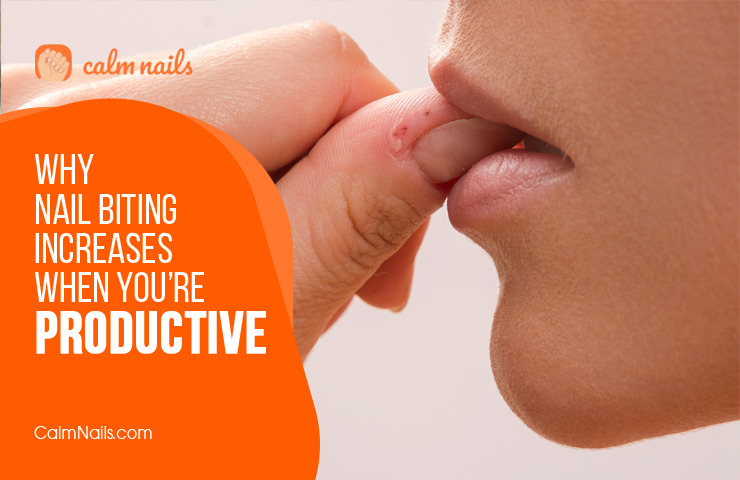
  • Why Nail Biting Increases When You’re “Productive”

    It often starts on a good day.

    You sit down to work with a clear head. The task makes sense. Time moves quickly. You are finally in that rare, productive rhythm where things just flow. Later, when you step away from your desk or glance down at your hands, you notice it.

    Your nails are shorter. Rougher. Uneven.

    You do not remember biting them.

    For many people, this moment is deeply confusing. Nail biting is supposed to be about stress or anxiety, so why does it show up when you feel focused, capable, even calm?

    The answer has less to do with emotions and more to do with how the brain behaves when it is fully engaged.

    When attention narrows, habits take over

    Productivity pulls attention inward. When you are concentrating, your brain prioritizes the task in front of you and lets go of everything else that feels unnecessary in the moment. Posture fades into the background. Breathing becomes shallow or irregular. Hands move without supervision.

    This is not a failure of self-control. It is a normal function of the human brain.

    When awareness drops, the brain relies on familiar patterns. These patterns are efficient and automatic. They do not require thought. For many adults, nail biting is one of those patterns.

    It slips in quietly, doing its job without asking permission.

    How nail biting becomes linked to focus

    Most nail biters do not start biting during emotional distress. The habit often forms in moments of stillness and concentration. Studying for exams. Sitting through long classes. Working at a computer for hours. Listening intently while thinking.

    Over time, the brain connects these moments with a small, repetitive movement that offers sensory feedback. The feeling is predictable. The motion is familiar. The relief is subtle but real.

    Eventually, focus itself becomes the trigger.

    This is why people often say they bite their nails most when they are “in the zone.” The habit is not interrupting productivity. From the brain’s perspective, it supports it.

    Why this shows up so often in capable, driven adults

    Nail biting during productivity is especially common among people who are high-functioning and internally driven. Students, professionals, creatives, and anyone who spends long hours thinking tend to experience it more often.

    These individuals are often good at staying composed. They push through discomfort. They do not always express stress outwardly.

    The body still needs an outlet.

    Nail biting becomes a quiet way to regulate tension without drawing attention or slowing things down. It happens in the background, unnoticed, until the evidence appears later.

    Why trying to “stop” rarely works in the moment

    Most advice around nail biting relies on willpower. Notice the urge. Resist it. Replace it.

    The problem is that willpower requires awareness, and awareness is exactly what disappears during deep focus.

    You cannot monitor your hands while your mind is fully occupied. By the time you remember to stop, the habit has already played out.

    This is why shame and self-criticism tend to make things worse. They add pressure without addressing the real issue, which is the absence of awareness at the moment the habit occurs.

    What actually helps is not control, but noticing

    Lasting change begins when the habit is brought into awareness gently and consistently. Not with force. Not with punishment. Just enough to interrupt the automatic loop.

    When people start noticing when and where nail biting happens, patterns emerge. Certain tasks. Certain times of day. Certain environments.

    With awareness, the brain begins to pause. The habit loses some of its invisibility. Choice slowly returns.

    This is the foundation of behavior change. Not fighting the habit, but making it visible.

    Progress is quieter than people expect

    Progress does not usually look like quitting overnight.

    It looks like noticing your hand sooner. Pulling away without frustration. Experiencing fewer damaged nails by the end of the week. Feeling less surprised when you look down.

    Over time, the association between productivity and nail biting weakens. The brain learns that focus does not require that familiar movement anymore.

    The habit fades not because it was forced out, but because it is no longer needed.

    Productivity was never the enemy

    If nail biting shows up when you are productive, it does not mean something is wrong with you. It means your brain learned a shortcut during moments of focus.

    Shortcuts can be changed.

    With patience, awareness, and a calm approach, even habits that feel deeply ingrained can soften and eventually disappear.

    You do not need to work less or avoid focus to stop biting your nails.

    You just need to start noticing what happens when your attention is elsewhere.

    TL;DR

    Nail biting often increases during productivity because deep focus reduces awareness, allowing automatic habits to take over. The behavior is not about failure or stress. It is about regulation and learned patterns. Gentle awareness, not willpower, is what leads to real change.

    FAQs

    Why do I bite my nails even when I feel calm?

    Because the habit is often linked to focus and automatic regulation, not emotional distress.

    Why does it happen most at work or while studying?

    Repetition and long periods of concentration reinforce habit loops over time.

    Can I stop nail biting without disrupting productivity?

    Yes. Awareness-based approaches allow change without breaking focus.

    How long does it take to see improvement?

    Many people notice increased awareness within days and gradual improvement over weeks.

    You may also find this helpful: New Year Wishes from CalmNails: A Gentle Reminder to Care for Yourself

  • New Year Wishes from CalmNails: A Gentle Reminder to Care for Yourself

    The first day of the year always feels a little different.

    The noise from last night has settled. The calendar has turned. For a brief moment, everything feels still. It is often in this quiet space that we begin to reflect, not just on what we want to achieve, but on how we want to live.

    At CalmNails, we see January 1 not as a starting line you must rush from, but as a pause. A moment to notice yourself without judgment. A moment to choose a kinder way forward.

    As 2026 begins, we want to offer you something simple. A wish that this year feels lighter. More aware. More forgiving. Especially if nail biting has been part of your story for a long time.

    A Habit That Usually Begins Without Permission

    Most people do not remember when they started biting their nails.

    It happens quietly. While studying, scrolling, waiting, thinking. Often during moments of stress or boredom. Over time, it becomes automatic, something your hands do before your mind has time to intervene.

    Many people who use CalmNails tell us the same thing.
    “I do not even realize I am doing it until it is too late.”

    This is important to understand, especially at the start of a new year.

    Nail biting is not a lack of discipline. It is not a failure of willpower. It is a learned response, a habit your brain created to regulate emotion or focus. When life feels overwhelming, the body looks for relief. Nail biting often becomes that relief.

    And when you see it this way, something changes. The habit becomes something to understand, not something to fight.

    Why New Year Resolutions Often Fail Nail Biters

    Every January, people promise themselves that this will be the year they finally stop.

    They try harder. They hide their hands. They use bitter polishes. They set strict rules. For a few days or weeks, things improve. Then stress returns, life gets busy, and the habit slips back in.

    The cycle repeats, often followed by frustration and self blame.

    The problem is not the intention. The problem is the approach.

    Force creates resistance. Shame strengthens habits. Pressure pushes behavior underground, where it becomes even more automatic.

    This is why CalmNails was created around a different idea. Change does not begin with control. It begins with awareness.

    The CalmNails Way: Learning to Pause

    When you open the CalmNails app for the first time, you are not asked to stop anything immediately.

    Instead, you are guided to notice.

    Notice the urge.
    Notice the sensation around your fingers.
    Notice what is happening in your body before the habit takes over.

    These short daily sessions are not lectures. They are quiet moments of curiosity. They train a skill that most people have never been taught. The ability to pause between an urge and an action.

    That pause is powerful. It is where choice lives.

    With practice, the urge loses its urgency. It becomes something you observe rather than obey. Over time, the habit begins to loosen, not because you forced it to stop, but because your brain learned a new response.

    This is how real habit change happens. Gently. Repeatedly. With patience.

    A Different Kind of Self Care

    Self care is often presented as something elaborate. Long routines. Perfect results. Big transformations.

    But for many CalmNails users, self care begins with two minutes a day. Sitting still. Listening. Paying attention to their hands without criticism.

    This kind of care does not ask you to become someone else. It asks you to understand who you already are.

    When you practice awareness consistently, something deeper happens. You begin to notice other habits too. How you react to stress. How quickly you judge yourself. How often you push instead of listen.

    Nail biting becomes the doorway, not the destination.

    Our New Year Wish for You

    As 2026 begins, our wish is not that you never bite your nails again.

    Our wish is that you become kinder to yourself when you do.

    We wish you moments of awareness instead of autopilot.
    We wish you progress without pressure.
    We wish you the confidence that comes from understanding your own patterns.

    Change does not arrive all at once. It arrives in small moments you choose differently. One pause. One breath. One session at a time.

    Moving Forward Into the Year

    If nail biting has followed you for years, it can feel like part of your identity. It is not. It is simply a habit your brain learned, and what was learned can be gently unlearned.

    This year does not need a dramatic promise. It needs consistency, curiosity, and compassion.

    CalmNails is here to walk that path with you. Quietly. Patiently. Without judgment.

    As the year unfolds, may you notice yourself more. May your hands feel less tense. May change feel possible, not forced.

    Happy New Year from all of us at CalmNails.

    TL;DR

    The new year does not need harsh resolutions to create change. Nail biting is an automatic habit, not a personal failure. CalmNails helps you build awareness so you can pause, choose differently, and slowly break the cycle. Gentle daily practice creates lasting change.

    FAQs

    Is nail biting really something I can change after years?

    Yes. Nail biting is a learned habit driven by the brain. With awareness and practice, the brain can form new patterns at any age.

    How much time do I need each day?

    Most CalmNails sessions take only a few minutes. Consistency matters more than duration.

    What if I slip back into biting?

    Slipping is part of learning. CalmNails focuses on noticing without judgment and returning to awareness, not starting over.

    Is this about willpower?

    No. CalmNails helps you build awareness, which is more effective and sustainable than relying on willpower alone.

    Checkout our latest post: 6 Everyday Habits That Age Your Hands Faster and What Your Nails Reveal About Them

  • 6 Everyday Habits That Age Your Hands Faster and What Your Nails Reveal About Them

    Most of us learn early that our face tells our story. We learn how to moisturize it, protect it, and study it closely in the mirror. But our hands are quietly telling a story too, often a much more honest one.

    Hands are always working. They wash, type, grip, scroll, clean, comfort, and cope. They are rarely rested and even more rarely cared for with the same intention we give our face. Over time, this constant exposure leaves marks. Dryness, fine lines, discoloration, brittle nails, uneven growth. These changes do not appear overnight, and they are not random.

    Your hands age faster because they reflect your habits.
    Your nails notice even sooner.

    At CalmNails, we look at nails not as a cosmetic detail, but as a form of communication. Nail health, nail damage, and nail behaviors often mirror what is happening beneath the surface. Stress, repetition, neglect, and emotional overload all leave subtle clues in your hands long before you consciously connect the dots.

    This is not about blame. It is about awareness.

    Below are six everyday habits that quietly age your hands faster than you expect, and what your nails may already be trying to tell you about them.

    Why Hands and Nails Often Show Aging Before the Rest of the Body

    Hands live a harder life than most parts of the body. The skin on the hands is thinner than on many other areas, yet it is exposed constantly to water, soap, friction, chemicals, sunlight, and tension. While your face might receive serums, sunscreen, and nightly routines, hands are often left unprotected.

    Nails, in particular, respond quickly to internal and external stressors. They rely on circulation, nutrition, hydration, and gentle treatment. When any of these are compromised, nails reflect the change through texture, strength, growth speed, and behavior such as biting or picking.

    Think of nails as early messengers. They respond to what you do every day, not what you intend to do occasionally.

    Understanding the habits that shape your hands is the first step toward changing how they age.

    Habit 1: Living With Constant Stress That Never Fully Turns Off

    Stress is not just something you feel. It is something your body lives with. When stress becomes chronic, even at a low level, it changes how your body repairs itself.

    Your nails may reveal this through ridges, peeling, brittleness, or slow growth. You might notice yourself touching your nails more often, pressing on them, or biting them without realizing it. These are not character flaws. They are physical responses to a nervous system that rarely rests.

    When stress hormones remain elevated, collagen production slows. Blood flow shifts toward survival functions and away from repair. Hands, which already receive less attention, show wear quickly under these conditions.

    Aging hands linked to stress are not about years. They are about load.

    Learning to notice when your hands tense, clench, or move automatically toward your nails can become a powerful moment of awareness. It is not about stopping stress entirely. It is about recognizing when your body is asking for relief.

    Habit 2: Nail Biting or Picking as an Unconscious Coping Mechanism

    Nail biting and picking are often framed as bad habits to break. In reality, they are coping strategies that developed for a reason.

    Many people bite or pick their nails during moments of boredom, pressure, uncertainty, or emotional overload. The behavior creates brief relief, but it also causes repeated micro trauma to the nail bed and surrounding skin. Over time, this trauma adds up.

    Hands begin to look older because inflammation becomes chronic. Nails thin out. Cuticles lose their protective role. The skin around the nails struggles to heal fully before it is damaged again.

    What your nails reveal here is not lack of discipline. They reveal unmet needs for regulation and calm.

    When nail biting is approached with curiosity instead of judgment, change becomes possible. Replacing the behavior with gentle care rather than force helps both the habit and the visible signs of aging ease over time.

    Habit 3: Frequent Hand Washing Without Replacing Lost Moisture

    Clean hands are essential, but constant washing comes at a cost when it is not balanced with hydration.

    Every time you wash your hands, you strip away natural oils that protect the skin and nails. Without replenishing moisture, the skin barrier weakens. Nails lose flexibility and become prone to splitting. Cuticles dry out and tear more easily.

    Aging hands linked to overwashing often feel tight, look dull, and show fine lines earlier than expected. Nails may appear rough or flaky, even if they are not weak by nature.

    This habit is especially common among people who are conscientious, health aware, or caregiving oriented. Ironically, the same people who care deeply about cleanliness often forget to care for their hands afterward.

    Your nails reveal imbalance here. They are asking not for less washing, but for better aftercare.

    Habit 4: Ignoring Cuticle Health and Treating It as an Afterthought

    Cuticles are often misunderstood. Many people see them as something to cut, push back aggressively, or remove entirely. In reality, cuticles serve as a protective seal for new nail growth.

    When cuticles are damaged repeatedly, the nail matrix underneath becomes vulnerable. This can lead to uneven growth, dullness, chronic hangnails, and nails that never quite look healthy no matter how much polish is applied.

    Aging hands linked to neglected cuticles often look inflamed or uneven, even when the nails themselves are trimmed neatly.

    What your nails reveal in this case is not neglect, but misinformation.

    Gentle cuticle care preserves the foundation of healthy nails. When cuticles are respected rather than removed, nails grow stronger, smoother, and more resilient over time.

    Habit 5: Repetitive Hand Movements From Typing, Scrolling, and Gripping

    Modern life demands constant hand use. Typing, texting, scrolling, gripping a mouse, holding a phone. These movements seem harmless, but repetition without awareness creates tension patterns.

    Over time, this tension affects circulation and joint mobility. Nails may break unevenly. Hands may appear strained or stiff. Fine lines deepen as the skin holds tension even at rest.

    Aging hands linked to repetitive motion are not about age. They are about accumulation.

    Your nails reveal this habit through asymmetrical wear, frequent breakage on specific fingers, or soreness that seems unrelated to injury.

    Small pauses, stretching, and moments of release throughout the day help interrupt these patterns. Awareness, again, becomes the most powerful tool.

    Habit 6: Leaving Hands and Nails Out of Your Skincare Routine Entirely

    Many people invest heavily in facial skincare while leaving their hands completely unprotected. Sunscreen stops at the wrist. Moisturizer is applied sparingly or only when dryness becomes uncomfortable.

    Hands receive as much sun exposure as the face, often more. They also experience greater environmental stress. When they are excluded from care routines, they age faster.

    Nails, which rely on the surrounding skin for support and nourishment, reflect this neglect through discoloration, slow growth, and fragility.

    What your nails reveal here is not neglect born of carelessness. It is simply habit.

    When hands are included in daily skincare rituals, even in small ways, their appearance changes noticeably over time. Consistency matters more than complexity.

    Why Awareness Changes Hands More Than Any Quick Fix Ever Could

    There is no product that can fully reverse years of unconscious habits overnight. But awareness changes behavior in ways that quick fixes never sustain.

    When you begin noticing how your hands move through the day, how your nails respond to stress, and how often they are used as tools rather than cared for as part of your body, something shifts.

    Nail care becomes less about appearance and more about listening.

    At CalmNails, we believe nail health improves most when people feel safe enough to slow down. When care replaces correction, hands respond.

    Aging is not the enemy. Unnoticed strain is.

    Gentle Daily Rituals That Support Younger Looking Hands Over Time

    Supporting younger looking hands does not require perfection. It requires presence.

    A single mindful moment of hand care each day can make a visible difference. Moisturizing slowly instead of rushing. Pausing when you notice nail biting beginning. Including hands when applying sunscreen or lotion.

    These rituals signal safety to the nervous system. They reduce stress driven behaviors. Over time, nails grow stronger, cuticles heal, and hands soften.

    The changes are gradual, but they are real.

    TL;DR

    Hands age faster because they reflect daily habits, stress, and repetition.
    Nails act as early signals of these patterns.
    Six common everyday habits quietly accelerate visible aging in the hands.
    Awareness and gentle nail care slow this process naturally and sustainably.

    Frequently Asked Questions

    Do nails really show signs of stress and aging early?

    Yes. Nails respond quickly to stress, hydration, circulation, and repetitive behavior, often before other visible signs appear.

    Can nail damage from habits be reversed?

    In most cases, yes. Nails grow continuously and respond well to consistent, gentle care and reduced trauma.

    Is nail biting always related to anxiety?

    Not always, but it is commonly linked to stress, boredom, or emotional regulation needs.

    How long does it take to see improvement in hands and nails?

    Many people notice changes within a few weeks of consistent care, though deeper habits take longer to shift.

    A Closing Thought

    Your hands are not betraying you.
    They are reflecting how much they carry.

    When you begin to listen to your nails instead of fighting them, care becomes easier. Aging slows. And your hands start telling a calmer story.

    You may also find this helpful and interesting: What Queen Victoria’s Wedding Quietly Teaches Us About Confidence, Rituals, and the Habits We Carry

  • What Queen Victoria’s Wedding Quietly Teaches Us About Confidence, Rituals, and the Habits We Carry

    TL;DR

    Queen Victoria’s wedding shaped traditions that still exist today, not because of luxury, but because of intention. Her story reminds us that how we show up during meaningful moments matters. Small habits, including nail biting, are often signals of how we manage emotion and attention, not flaws. Calm change begins with awareness, not pressure.

    A Question That Keeps Trending for a Reason

    Every few months, a simple question resurfaces online.
    Who does Queen Victoria marry?

    On the surface, it feels like a curiosity driven by history lovers, students, or someone scrolling late at night. But when certain questions repeat across generations, they usually carry more meaning than we admit.

    Queen Victoria married Prince Albert in 1840. The wedding itself was modest by royal standards, yet it quietly reshaped how the world thinks about weddings, love, and public presence. The white dress. The personal vows. The idea that even a monarch could choose partnership over politics.

    But beneath the history books and portraits, there is something more human in this story.

    It is about how people show up for important moments in their lives.

    And how inner steadiness often matters more than outer perfection.

    Why Weddings and Rituals Still Matter Today

    Weddings are not just celebrations. They are mirrors.

    They reflect how safe we feel, how grounded we are, and how present we can be when others are watching. That was true in 1840. It is still true now, whether the moment is a wedding, a family gathering, a holiday dinner, or even a quiet conversation across a table.

    Queen Victoria was young when she married. She carried the weight of leadership, expectation, and constant observation. Yet what made her wedding historic was not extravagance. It was intention.

    She chose simplicity. She chose symbolism. She chose to show up as herself.

    That choice resonated because people recognize authenticity, even across centuries.

    The Quiet Pressure of Being Seen

    Fast forward to today.

    Most of us are not royalty, but many of us feel watched in smaller, subtler ways. During holidays. At social events. At work meetings. On dates. Even while sitting across from friends.

    We notice our hands. Our posture. Our habits.

    For many people, this is when nail biting shows up the most. Not because they are broken. Not because they lack confidence. But because their nervous system is trying to regulate intensity in real time.

    High attention moments often activate small, repetitive behaviors. These habits are rarely about stress alone. They are about managing stimulation, emotion, and focus when the mind is active and the body needs grounding.

    This is where the conversation usually goes wrong.

    The Problem With Labelling Habits as Weakness

    Nail biting has been framed for decades as a bad habit that needs discipline or shame to disappear. But that framing misses the point.

    Habits form because they work on some level.

    They help release tension.
    They provide sensory feedback.
    They create a sense of rhythm.
    They give the brain something predictable to hold onto.

    When someone bites their nails during meaningful moments, it often means they care deeply about what is happening around them.

    The habit is not the enemy.

    The lack of understanding is.

    What Queen Victoria Understood Without Modern Psychology

    Queen Victoria did not have access to neuroscience, habit research, or behavioral apps. But she intuitively understood something powerful.

    Rituals create safety.

    Her wedding was not designed to impress. It was designed to feel right. That is why it changed culture. People adopted the white dress not because it was royal, but because it symbolized clarity, intention, and emotional presence.

    Rituals help the mind settle.

    And habits, whether helpful or unhelpful, are often attempts at creating micro rituals in moments that feel big.

    When we view habits through this lens, something shifts.

    Why Nail Biting Often Appears During Happy Moments

    This may sound surprising, but many people notice nail biting more during positive events than during stressful ones.

    Holidays.
    Celebrations.
    Family gatherings.
    Weddings.
    Reunions.

    Why?

    Because happiness still creates intensity.

    Excitement activates the nervous system just as much as anxiety. The brain looks for regulation. If a habit has historically helped manage that energy, it will surface again.

    This does not mean something is wrong.

    It means the brain is doing what it knows.

    Calm Does Not Come From Control

    Most habit change advice focuses on stopping. Resisting. Replacing.

    But control creates friction. And friction often strengthens the habit loop.

    Real change begins with slowing down and noticing.

    That is where CalmNails approaches habit awareness differently.

    Instead of framing nail biting as a flaw, CalmNails treats it as information. Each moment becomes data, not failure. The goal is not perfection. The goal is understanding patterns gently enough that the brain feels safe enough to choose differently.

    This matters especially during seasons of celebration, when pressure to appear composed can quietly build.

    The Holiday Season and the Weight of Expectations

    Holidays are meant to be joyful. Yet they come with unspoken expectations.

    To be present.
    To look relaxed.
    To connect effortlessly.
    To enjoy every moment.

    When the body feels the pressure to perform happiness, habits often step in to help regulate.

    This is why trying to force change during the holidays rarely works. But learning to work with your nervous system does.

    Small shifts create stability.

     Not rules.
    Not guilt.
    Not comparison.

    What Confidence Really Looks Like

    Confidence is often misunderstood as stillness.

    But real confidence is adaptability.

    It is the ability to notice what is happening inside without reacting harshly. It is the capacity to stay present even when emotions fluctuate.

    Queen Victoria’s wedding confidence did not come from control. It came from alignment. Her inner state matched the moment she was stepping into.

    That same principle applies today.

    When your inner rhythm matches your outer environment, habits soften naturally.

    How CalmNails Fits Into Everyday Life

    CalmNails is not designed to stop nail biting overnight. It is designed to support awareness over time.

    It helps users recognize when the habit appears.
    It encourages reflection without judgment.
    It builds consistency through gentle cues.
    It supports emotional regulation without forcing suppression.

    Over time, the brain learns new ways to regulate energy. Not through pressure, but through repetition that feels safe.

    That is how lasting change happens.

    A More Compassionate Way Forward

    If there is one lesson to take from Queen Victoria’s story, it is this.

    Meaningful moments deserve presence, not perfection.

    Your habits are not enemies trying to sabotage you. They are signals trying to help you cope.

    When you listen instead of fight, the relationship with yourself changes.

    And when that relationship softens, habits lose their grip naturally.

    FAQ

    Why do I bite my nails even when I am happy?

    Because excitement activates the nervous system. Nail biting often helps regulate energy, not just stress.

    Is nail biting a sign of anxiety?

    Not always. It can also be linked to focus, stimulation, perfectionism, or emotional intensity.

    Should I try to stop nail biting during the holidays?

    Forcing change during high stimulation periods can backfire. Awareness and gentle tracking work better.

    How does CalmNails help differently?

    CalmNails focuses on understanding patterns and emotional cues rather than stopping behavior through pressure.

    Can habits really change without strict discipline?

    Yes. Habits change more sustainably when the nervous system feels safe and supported.

    A Final Thought

    People still search for Queen Victoria’s wedding because they are drawn to moments where presence shaped history.

    You may not be shaping global traditions.

    But every time you choose understanding over judgment, you are shaping something just as important.

    Your relationship with yourself.

    And that is always worth celebrating.

    You may also find this helpful:  Why 92% of Resolutions Fail and the “Slow Direction” Strategy That Actually Works

  • Why 92% of Resolutions Fail and the “Slow Direction” Strategy That Actually Works

    TL;DR

    Most resolutions fail not because people lack motivation, but because they try to change too fast. The “Slow Direction” strategy focuses on tiny, consistent shifts that work with the brain instead of against it. This approach builds real habits, reduces self-blame, and creates lasting change, especially for behaviors like nail biting and other stress-driven habits.

    The Question We Rarely Ask at the Start of a New Year

    Every January begins with hope.

    New goals. New routines. A quiet promise to ourselves that this year will be different.
    And yet, by February, most of those promises are already gone.

    Studies consistently show that nearly 92% of resolutions fail within weeks.
    Not months. Weeks.

    But here’s the uncomfortable truth most people never hear:

    The problem isn’t discipline.
    It isn’t laziness.
    And it definitely isn’t willpower.

    The problem is speed.

    Why Fast Change Feels Right but Fails Almost Every Time

    We live in a world trained to believe that change should be immediate.
    Quick results. Clear wins. Before-and-after stories that skip the messy middle.

    So when someone decides to stop biting their nails, reduce screen time, eat better, or manage stress, they often go all in. They set strict rules, high expectations, and hard deadlines.

    For a few days, it feels empowering.
    Then reality shows up.

    The brain does not respond well to sudden pressure.
    Especially when a habit has been serving a purpose, even an unhealthy one.

    Nail biting, for example, often helps people regulate emotion, focus, or tension.
    When that behavior is removed abruptly, the brain panics and looks for relief elsewhere.

    This is why so many people say, “I was doing fine, and then I suddenly relapsed.”

    Nothing sudden happened.
    The system was overwhelmed.

    What the Data Quietly Tells Us About Habit Failure

    Behavior research paints a clear picture.

    When people try to change too many things at once, stress increases.
    When stress increases, the brain defaults to familiar behaviors.
    And when familiar behaviors return, shame follows.

    That shame becomes the real habit.

    Research in behavioral psychology and neuroscience shows that habits tied to emotion, comfort, or regulation cannot be erased through force. They must be replaced slowly.

    This is where most resolutions collapse.
    They aim for control, not understanding.

    The Hidden Cost of “Starting Over” Again and Again

    Each failed resolution leaves a mark.

    Not on your calendar.
    On your confidence.

    Over time, people stop trusting themselves.
    They stop believing change is possible.
    They internalize failure as identity.

    “I just don’t stick to things.”
    “I’ve always been like this.”
    “Something must be wrong with me.”

    Nothing is wrong with you.
    You’ve just been taught the wrong strategy.

    Introducing the Slow Direction Strategy

    The Slow Direction strategy works on a simple but powerful idea:

    Direction matters more than speed.

    Instead of asking, “How fast can I stop this habit?”
    It asks, “How gently can I move in a better direction?”

    Slow Direction does not fight the brain.
    It collaborates with it.

    This approach is grounded in how habits actually form and fade, not how we wish they would.

    What Slow Direction Looks Like in Real Life

    Slow Direction is not about doing nothing.
    It’s about doing less, more intentionally.

    For someone who bites their nails, it might begin with noticing patterns instead of stopping behavior. When does the urge appear? Is it during work, scrolling, waiting, or thinking?

    Awareness reduces intensity.
    That alone is a form of progress.

    The next step might be creating a pause.
    Not stopping the habit, just delaying it by a few seconds.

    That pause retrains the brain to recognize choice.

    Over time, the habit loses urgency.
    Not because it was forced away, but because it is no longer needed as much.

    Why Slow Direction Works When Motivation Fades

    Motivation is unreliable.
    It comes and goes based on mood, energy, and environment.

    Slow Direction does not depend on motivation.
    It depends on systems.

    Tiny systems. Quiet systems.
    The kind that fit into real life.

    This is why people who use gradual, supportive habit tools are more likely to stick with change long-term.

    Not because they are stronger.
    But because they are kinder to themselves.

    The Role of Self-Trust in Habit Change

    One of the most overlooked aspects of habit change is trust.

    Every time you follow through on a small promise, trust grows.
    Every time you break a big one, it shrinks.

    Slow Direction rebuilds trust by design.

    It gives you wins you can actually keep.

    And trust, once restored, becomes the foundation for deeper change.

    Where CalmNails Fits into the Slow Direction Approach

    CalmNails was built around this exact understanding.

    It does not demand perfection.
    It does not shame slip-ups.
    It does not push unrealistic timelines.

    Instead, it helps you observe patterns, understand triggers, and track progress without pressure.

    This matters because habit change is not about stopping behavior.
    It’s about understanding why the behavior exists.

    When people feel supported instead of judged, change becomes sustainable.

    A Quiet Shift That Changes Everything

    People who succeed with Slow Direction often describe a surprising moment.

    They realize the habit is fading.
    Not because they forced it away.
    But because they no longer need it as much.

    The nervous system calms.
    The urge softens.
    The behavior loses meaning.

    This is how real change happens.

    Quietly. Gradually. Honestly.

    Why This Strategy Matters More During Resolution Season

    The start of a new year creates pressure to transform overnight.

    But the brain does not reset with the calendar.

    If anything, January is already emotionally loaded.
    Expectations are high. Energy is uneven. Patience is low.

    This is the worst time for extreme change.

    And the best time for slow direction.

    What to Do Instead of Making Another Resolution

    Instead of declaring what you will stop doing, ask a different question.

    “What would feel slightly better than where I am now?”

    That answer is usually small.
    And that’s exactly why it works.

    Change does not need drama.
    It needs direction.

    Conclusion

    If 92% of resolutions fail, the issue is not people.
    It’s the method.

    The Slow Direction strategy works because it respects how humans actually change.
    It replaces pressure with awareness.
    Shame with curiosity.
    Force with trust.

    If you want this year to be different, don’t move faster.
    Move gently, consistently, and with intention.

    That is how habits truly change.

    If you’re ready to stop starting over and begin changing at a pace that actually lasts, explore CalmNails.

    It’s designed to help you understand your habits, not fight them.

    Real change starts there.

    FAQs

    Why do most resolutions fail so quickly?

    Because they rely on motivation and force instead of systems and understanding.

    Is slow change really effective?

    Yes. Research shows gradual change leads to stronger habit retention and less relapse.

    Does this work for nail biting and similar habits?

    Absolutely. Habits linked to emotion respond best to gentle, consistent approaches.

    What if I slip up?

    Slip-ups are part of the process. Slow Direction treats them as data, not failure.

    How can CalmNails help?

    It supports awareness, tracking, and progress without pressure or shame.

    You may also find this helpful: A Beautiful Gift for Your Hands (and You!) This Christmas

  • A Beautiful Gift for Your Hands (and You!) This Christmas

    TL;DR

    If you’re racing against the holiday clock, here’s the scoop: CalmNails is the ultimate Christmas hack. It’s a salon-quality manicure you can do in 10 minutes while your cocoa cools. No smudging, no expensive appointments, and no “wet nail” paralysis. It’s a gift of time, confidence, and sheer beauty for your hands, and a much-needed mental break for you. Perfect for your own stocking or as the “best friend” gift of the year.

    The Magic of Hands: The Unsung Heroes of the Season

    Think about everything your hands do during the month of December. They are the architects of gingerbread houses. They are the master navigators of tangled fairy lights. They write the heartfelt cards, carry the heavy grocery bags, and; most importantly; they are the ones reaching out to hold the hands of people we love.

    Yet, usually, by December 24th, our hands look like they’ve been through a marathon in a blizzard. They’re dry, the cuticles are screaming for help, and any DIY nail polish we tried to apply at 1 AM is already chipped from opening Amazon boxes.

    This Christmas, we’re changing the narrative. We’re giving those hands a standing ovation. And we’re doing it with something that feels like a luxury but acts like a lifesaver: CalmNails.

    Why Your Manicure is Actually a Mindset

    We often dismiss “getting our nails done” as a vanity project. But let’s be real; have you ever noticed how your mood shifts when you catch a glimpse of a perfect, polished hand while you’re typing an email or holding a glass of wine?

    There is a psychological phenomenon sometimes called “enclothed cognition,” but for your hands. When you look “put together,” you feel put together. In the middle of holiday chaos—when the kids are hyper, the oven is beeping, and the house is a mess; having a set of beautiful nails is a tiny, shimmering anchor of order. It says, “I’ve got this.”

    CalmNails isn’t just about the color; it’s about that feeling of being polished without the stress of the process. It’s the “calm” in the storm.

    The CalmNails Revolution: Not Your Mother’s Press-Ons

    If the word “press-on” makes you think of those thick, plastic-looking things that used to pop off into your salad in the 90s, I have good news. We’ve entered a new era.

    The “Flexi-Fit” Secret Traditional fake nails were rigid. Human nails are not. CalmNails are engineered with a specialized polymer that mimics the natural curve of your nail bed. They are thinner at the base so they sit flush against your cuticle (meaning no one will know they aren’t yours) and reinforced at the tips so you can actually open a soda can without a catastrophe.

    The “Winter-Proof” Bond The holidays involve a lot of water. Washing dishes, hot showers to escape the cold, maybe even a snowball fight. CalmNails uses a non-toxic, medical-grade adhesive that loves a challenge. They stay put through the chores but come off gently when you’re ready for a change, keeping your natural nails underneath healthy and strong.

    Choosing Your Holiday Vibe: A Palette for Every Personality

    One of the best parts of CalmNails is the variety. You aren’t stuck with one look for the whole month. You can match your nails to your mood (or your festive sweater).

    1. The “Classic Cocoa” (Timeless Reds)

    There is nothing quite like a deep, sophisticated red during Christmas. It’s the color of holly berries and vintage ribbons. It’s for the person who loves traditions, Sinatra Christmas albums, and a perfect winged eyeliner.

    2. The “Frosted Morning” (Subtle Shimmers)

    For those who prefer a “clean girl” aesthetic. These are soft milks, sheer pinks, and “glazed donut” finishes. They catch the light like sunlight hitting fresh snow. It’s elegant, understated, and goes with every single outfit in your closet.

    3. The “Midnight Toast” (Dazzling Glitters)

    If you can’t wear glitter at Christmas, when can you? We’re talking sophisticated gradients; glitter that starts at the tip and fades toward the base. It’s New Year’s Eve in a box. It’s for the person who wants their hands to do the talking.

    The 10-Minute Ritual: How to Reclaim Your Peace

    Most of us don’t have two hours to sit in a salon chair during the busiest month of the year. But we do have 10 minutes. Here is how to turn your CalmNails application into a mini-spa moment:

    • Step 1: Set the Scene. Put your phone on “Do Not Disturb.” Put on that one song that always makes you feel peaceful.
    • Step 2: The Prep. Use the little file and prep pad included in the kit. Think of this as shedding the stress of the day. You’re clearing the canvas.
    • Step 3: Find the Fit. Lay out the nails. Finding the perfect size for each finger is strangely satisfying; like finishing a very easy puzzle.
    • Step 4: The Press. Apply the adhesive, align the nail, and press down for 30 seconds. In those 30 seconds, close your eyes and take a deep breath.
    • Step 5: The Reveal. Wash your hands, apply a little cuticle oil or lotion, and admire the transformation.

    In the time it takes to brew a pot of coffee, you’ve gone from “stressed-out host” to “polished icon.”

    The Gift That Keeps on Giving (to Others!)

    If you’re looking for a gift that people will actually use and thank you for, this is it. We all have that friend who is overworked, that sister who never treats herself, or that teacher who deserves a break.

    Why it’s the perfect recommendation:

    • It’s Personal but Easy: You don’t need to know their exact ring size or clothing size. A kit comes with enough sizes to fit anyone.
    • It’s an Experience: You aren’t just giving them a product; you’re giving them a reason to sit down and pamper themselves.
    • The “Wow” Factor: When they finish and realize how good they look, they’re going to be texting you photos of their hands immediately.

    Pro-tip: If you’re hosting a girls’ night or a family brunch, leave a few boxes of CalmNails out. It’s a fantastic, low-pressure activity that everyone can do while chatting.

    Real Talk: Why We Love These for the Planet (and Your Wallet)

    We all want to be a bit more conscious about what we buy.

    • Budget-Friendly: You get the look of a $100 salon set for less than the price of a fancy cocktail.
    • Less Waste: The packaging is designed to be minimal and recyclable. Plus, if you use the adhesive tabs, the nails themselves are reusable! You can wear your “Christmas Red” for the party, take them off, and save them for Valentine’s Day.
    • Kindness Matters: CalmNails are 100% vegan and cruelty-free. No harsh chemicals, no animal testing, just pure beauty.

    A Final Thought: You Deserve the Sparkle

    Between the shopping lists and the meal planning, it’s easy to put yourself at the very bottom of the priority list. We often think of “self-care” as a big, expensive thing—a weekend away or a full day at the spa.

    But sometimes, self-care is small. It’s the 10 minutes you spend making your hands look beautiful. It’s the tiny spark of joy you feel when you see your nails reflecting the Christmas tree lights. It’s the confidence you feel when you hand a gift to someone else.

    You do so much for everyone else this season. Let CalmNails be the gift you give to your hands… and to yourself.

    Frequently Asked Questions

    Q: I’m really bad at DIY stuff. Can I actually do this? 

    A: Absolutely. If you can peel a sticker, you can do this. The Flexi-Fit technology makes them very forgiving. If you get it slightly crooked, you have a few seconds to adjust before the bond sets.

    Q: Will they fall off in my sleep or while I’m cooking? 

    A: Not if you prep correctly! The secret is the “Prep Pad” included in the kit. It removes the natural oils from your nails so the adhesive can really grab on. Once they’re on, they are on. You can knead dough, wrap presents, and even tackle the laundry without fear.

    Q: How do I take them off? I don’t want to ruin my real nails. 

    A: No drills or harsh acetone required! Just soak your hands in warm, soapy water with a little bit of oil (olive oil or coconut oil works great) for about 10–15 minutes. They will gently lift off. Your natural nails will actually feel stronger because they’ve been protected from the winter air!

    Q: Can I trim or file them? 

    A: Yes! If you love a specific color but the nails are a bit too long for your lifestyle, you can clip and file them just like natural nails. They won’t crack or splinter.

    Q: My nails are very small/very wide. Will they fit? 

    A: Every CalmNails kit comes with 30 nails in 15 different sizes. We’ve tested them on everything from petite teen hands to wider nail beds. There’s a perfect fit for everyone in every box.

    You may also like to read this:  Holiday Gatherings Can Be Triggers

  • Holiday Gatherings Can Be Triggers

    TL;DR

    Holiday gatherings are meant to feel joyful, but they can quietly stir old habits and inner tension. This post explores why that happens and how you can stay present, calm, and connected without pulling away from the moments that matter most.

    The Season Everyone Looks Forward To

    And Quietly Prepares Themselves For

    There is something deeply comforting about the holiday season. The lights feel warmer. Conversations linger longer. People slow down, even if just a little. For many of us, this time of year carries memories of laughter, shared meals, and familiar faces gathered in one place.

    Yet beneath the celebration, there’s another layer that rarely gets talked about.

    Holiday gatherings bring people together, but they also bring together expectations, emotions, old dynamics, and unspoken comparisons. Not in a dramatic way. In a subtle one. The kind that shows up in the body before the mind fully catches up.

    You might notice yourself feeling slightly restless during conversations. Or overly alert in a room full of people you love. Or slipping into small, repetitive behaviors without even realizing it. Not because something is wrong, but because your system is responding to a lot at once.

    This is more common than most people admit.

    Why Happy Moments Can Still Feel Overwhelming

    The human nervous system doesn’t separate joy from stimulation.
    A full house, overlapping conversations, expectations to be “present,” memories tied to family roles, and the desire to show up well can all activate the same internal signals.

    During holidays, many people are:

    • Navigating social roles they don’t usually occupy
    • Revisiting old family dynamics
    • Trying to be fully present while managing inner thoughts
    • Adjusting routines, sleep, and personal space

    None of this means the gathering is bad.
    It simply means your mind and body are doing more work.

    For people who are thoughtful, sensitive, observant, or deeply reflective, this extra input often looks like small self-soothing behaviors. The kind that happen quietly and without intention.

    These behaviors aren’t flaws. They are signals.

    A Quiet Moment Most People Recognize

    Imagine sitting at a dinner table surrounded by familiar faces. The conversation moves fast. Stories overlap. Laughter rises and falls. You smile, nod, and participate, but part of your attention drifts inward.

    You feel a subtle need to anchor yourself.

    Your hands might fidget. You may focus on something small and repetitive. It’s not anxiety. It’s not discomfort. It’s simply your system finding balance in a busy moment.

    Most people have experienced this, even if they’ve never named it.

    The Role of Habits During Social Moments

    Habits don’t always come from distress. Often, they come from intensity.

    During holidays, intensity doesn’t look like pressure. It looks like fullness.
    Full schedules. Full rooms. Full conversations. Full emotions.

    Repetitive behaviors can act as a quiet regulator. They give the nervous system something steady when everything else feels dynamic. This is especially true for people who care deeply about connection and want to show up fully.

    Understanding this reframes the experience completely.

    Instead of asking, “Why am I doing this?”
    The better question becomes, “What is my body asking for right now?”

    Staying Grounded Without Pulling Away

    Avoiding gatherings isn’t the answer.
    Neither is forcing yourself to “power through.”

    Grounding comes from small, thoughtful adjustments that respect your inner rhythm while keeping you connected to the moment.

    Here are a few ways people naturally find balance during festive gatherings, without isolating themselves:

    Sometimes grounding looks like stepping outside for a few breaths, not because you’re overwhelmed, but because your body wants a pause.

    Sometimes it’s holding a warm drink and letting the warmth create a physical sense of calm.

    Sometimes it’s choosing a seat that feels more spacious, or focusing on one meaningful conversation instead of many surface-level ones.

    And sometimes, it’s simply becoming aware of your patterns instead of judging them.

    Awareness alone changes the experience.

    A Gentle Shift That Makes a Difference

    Many people assume that self-control is the goal during social moments. But control often creates tension. What actually helps is understanding.

    When you notice your body reaching for familiarity or repetition, it’s not a failure of will. It’s communication.

    Listening to that communication allows you to respond with kindness rather than correction.

    This is where gentle tracking becomes powerful.

    Not to stop behaviors.
    But to understand when and why they appear.

    How CalmNails Fits Into Moments Like These

    CalmNails isn’t about eliminating habits during holidays.
    It’s about learning how your habits connect to moments, environments, and emotions.

    During festive seasons, patterns often become clearer.
    Not because things are worse, but because life is fuller.

    CalmNails helps you notice these patterns without pressure. It allows you to reflect instead of react. Over time, this builds a relationship with your habits that feels respectful and calm.

    The goal isn’t perfection during celebrations.
    It’s presence.

    When You Leave the Gathering

    One of the most meaningful moments comes after.

    You drive home. The house quiets down. The energy settles.

    This is when reflection happens naturally.

    Instead of replaying moments with self-criticism, consider asking yourself:

    What moments felt grounding?
    What moments felt busy inside?
    What helped me stay present?

    These answers build self-trust. And self-trust is what carries you through future gatherings with ease.

    A Season Meant For Connection

    Including With Yourself

    Holidays are about togetherness. But they’re also about how you relate to your own inner world when everything around you feels alive and moving.

    Staying grounded doesn’t mean avoiding the table, the laughter, or the noise. It means learning how to stay with yourself while being with others.

    That balance is a skill.
    And it can be learned gently.

    FAQs

    Why do habits show up more during holidays?

    Because routines change, stimulation increases, and emotions are more present. It’s a natural response.

    Does this mean something is wrong with me?

    Not at all. It means your system is responding intelligently to a fuller environment.

    Should I try to stop these behaviors during gatherings?

    Focusing on awareness works better than forcing control, especially during social moments.

    How can CalmNails help during festive seasons?

    It helps you notice patterns with curiosity, not judgment, so habits lose their grip naturally.

    A Gentle Invitation

    If this season brings moments where you feel both connected and inwardly busy, you’re not alone. CalmNails is here to support that awareness, quietly and respectfully.

    Explore CalmNails when you’re ready.
    Not to change who you are.
    But to understand yourself a little better.

    You may also find the helpful : Why Holiday Stress Peaks in December and 5 Calm Ways to Handle It

  • Why Holiday Stress Peaks in December and 5 Calm Ways to Handle It

    The month of December is supposed to be magical, filled with twinkling lights, warm spices, and quality time. Yet, for many of us, it feels less like a winter wonderland and more like a high-speed treadmill that won’t stop until January 1st.

    If you find yourself snapping at loved ones, battling a never-ending to-do list, or catching yourself picking at your cuticles more than usual, you’re not alone. Stress levels spike dramatically during the festive season.

    At CalmNails.com, we understand that the health of your nails is directly tied to the state of your mind. Here’s a deep dive into why December is the ultimate stress trigger, and five simple, mindful ways to regain your calm.

    The December Deluge: Why Stress Reaches Its Peak

    The pressure we feel in December is a perfect storm of environmental, emotional, and psychological factors. It’s more than just the weather; it’s the expectation to be “happy” and “productive” at the same time.

    1. The Financial Tightrope

    Money worries lead the pack of holiday stressors. The average adult worries about overspending or not having enough funds to cover the season. The constant commercialism—ads pushing the “perfect” gift—creates an internal pressure cooker to spend beyond your means.

    2. The Emotional Trigger Points

    The holidays can be bittersweet. For many, this season amplifies feelings of grief and loneliness. Traditions that were once joyful feel empty when a loved one is missing. Furthermore, family gatherings can revert adults to old, stressful childhood roles and dynamics.

    3. The Time-Crunch Trap (The Finish Line)

    December is a paradoxical time:

    • Work Deadlines: You’re racing to meet year-end targets and close out projects before the annual shut-down.
    • Social Obligations: Holiday parties, school concerts, and neighborhood gatherings; a packed calendar often filled with things you feel obligated to do, not enjoy.
    • The “Always On” Culture: Even when you take PTO, about half of people still worry about work, making true rest impossible.
    4. Environmental Overload

    The physical environment itself becomes a source of stress. Crowded malls, endless parking lot searches, loud music, and bright lights create overwhelming sensory input that taxes your nervous system. Meanwhile, shorter days and less sunlight can worsen your mood, contributing to Seasonal Affective Disorder (SAD).

    5 Calm Ways to Handle Holiday Stress

    To prevent the December deluge from washing away your peace, you need intentional, realistic self-care practices. Here’s how you can re-center and protect your mental health, and your nails.

     Be a Master of the “Meaningful No”

    • The Stressor: Over-scheduling. Saying “yes” to every party, bake sale, and invitation leaves you resentful and exhausted.
    • The Calm Fix: Prioritize joy over obligation. Look at your calendar and identify the top three events that genuinely bring you happiness. Gently decline the rest. A simple, “Thank you so much for the invitation, but that date doesn’t work for me this year” is a full and complete sentence.
    • Nail Connection: When you feel overwhelmed, your body is in “fight or flight,” which can manifest in nail biting or picking. Saying no to an event is saying yes to a moment of calm, protecting your hands from stress-induced habits.

    Schedule “Productive Rest” (It’s Not Lazy!)

    • The Stressor: The belief that rest is a reward earned after the chaos.
    • The Calm Fix: Block out non-negotiable downtime. Treat a 30-minute relaxation break the same way you treat a work meeting. This isn’t just watching TV; this is mindful rest.
      • Try This: Use your Calm Nails app’s mindful exercises, take a warm bath, or simply sit in silence for 15 minutes without your phone.
    • Expert Insight (AIO): Taking care of yourself allows you to show up more fully for the moments that matter, making the time you do spend with family higher quality, not just higher quantity.

    Simplify and De-Commercialize Gift Giving

    • The Stressor: Financial strain and the pressure to find the “perfect” store-bought item.
    • The Calm Fix: Set a strict budget and stick to it. Consider new traditions that focus on experience or thoughtfulness over cost.
      • Ideas: Initiate a family name-draw instead of buying for everyone, donate to a charity in someone’s name, or make heartfelt, simple gifts like homemade baked goods.
    • Nail Connection: Channel your creative energy into a relaxing activity, like painting your nails with a calming shade of lacquer, rather than frantic shopping. The precision needed for a manicure is a proven form of focused mindfulness.

    Master the 5-4-3-2-1 Grounding Technique

    • The Stressor: Anxiety spiking in crowded places (malls, airports, family rooms).
    • The Calm Fix: Use a sensory grounding technique to pull yourself back into the present moment when you feel overwhelmed.
      • 5: Name five things you can see (The pattern on the carpet, the color of your polish).
      • 4: Name four things you can touch (Your sleeve, the smooth glass of your phone, the texture of your thumbnail).
      • 3: Name three things you can hear (The low hum of the AC, your own breath, the distant traffic).
      • 2: Name two things you can smell (Coffee, perfume).
      • 1: Name one thing you can taste (Gum, water).

    Practice The Mini-Manicure Meditation

    • The Stressor: Stress-picking at nails and cuticles.
    • The Calm Fix: Turn your nail care routine into a meditative ritual.
      • The Ritual: The simple act of filing, pushing back cuticles, or applying a strengthening coat forces you to slow down and focus only on the present task. This focus replaces the stress response and retrains your mind away from nervous habits.
      • Take Action: If you’re prone to biting or picking, apply a new coat of your favourite Calm Nails strengthening polish. The glossy, well-cared-for finish acts as a visual and tactile barrier, reminding you to pause before you stress-pick.

    Conclusion: Give Yourself the Gift of Calm

    This December, don’t just survive the holiday season—experience it. The greatest gift you can give your family is a calm, present version of yourself.

    Your nails are the first place stress shows up. Take care of your hands, and you take care of your mind.

    Your Next Step:

    Don’t wait until the New Year to start your calm journey. Take two minutes right now to check in with your hands.

    [Download the Calm Nails App Today]

    Use our guided mindful exercises and habit tracking features to make the rest of your December peaceful, polished, and stress-free.

    You may also like to know about this: The Top 2026 Well-Being Habits Americans Are Committing To. And How to Make Them Stick?

  • The Top 2026 Well-Being Habits Americans Are Committing To. And How to Make Them Stick?

    TL;TR

    Americans are changing how they approach wellness in 2026. Instead of extreme routines and pressure-filled resolutions, they are committing to small, calming habits that fit real life. Mental health micro-rituals, gentle movement, at-home self-care, reduced screen time, and emotional well-being are becoming the foundation of sustainable wellness. These habits work because they lower stress, support the nervous system, and are easy to repeat. CalmNails fits naturally into this shift by turning nail care into an intentional, hands-on ritual that promotes calm, consistency, and self-connection rather than perfection.

    Americans Are Tired of Fixing Themselves

    Talk to almost anyone in the US right now and you’ll hear the same quiet frustration.

    They’ve tried the routines.
    They’ve downloaded the apps.
    They’ve promised themselves “this year will be different.”

    And yet, the stress keeps returning.

    The problem isn’t that Americans don’t care about their well-being. It’s that most wellness advice has been built around intensity, not sustainability. In a culture already overwhelmed, extreme self-improvement has become another source of pressure.

    As 2026 approaches, something meaningful is changing.

    Americans aren’t chasing bigger transformations.
    They’re choosing habits that feel safe enough to repeat.

    This shift isn’t accidental. It’s grounded in behavioral science, mental health research, and lived experience. And it’s reshaping what well-being actually looks like in everyday American life.

    Why Most Wellness Habits Fail Before February

    Every January, the same pattern repeats. Goals are set with genuine hope, but collapse under the weight of daily life.

    From a behavioral standpoint, this makes sense.

    Habits don’t fail because people lack discipline. They fail because:

    • They demand too much emotional energy
    • They rely on motivation instead of regulation
    • They don’t integrate into real routines

    Research in psychology consistently shows that the nervous system determines behavior, not willpower. When a habit feels stressful, the brain resists repeating it, no matter how good the intention.

    That realization is driving the biggest wellness trend in America right now.

    The Real Wellness Shift Americans Are Making in 2026

    In 2026, well-being is no longer about becoming a better version of yourself overnight.

    It’s about becoming a calmer version of yourself over time.

    Across the US, people are committing to habits that:

    • Lower stress instead of increasing pressure
    • Feel grounding rather than demanding
    • Support emotional stability, not just physical outcomes

    These habits may look small from the outside, but their impact compounds.

    Habit One: Turning Mental Health Into Everyday Rituals

    For years, mental health was treated as something separate from daily life. You worked on it in therapy, during meditation sessions, or when things went wrong.

    That’s changing.

    Americans are beginning to understand that mental health is shaped by what we do repeatedly, not occasionally. Short, intentional rituals throughout the day are proving more effective than long, inconsistent practices.

    This might look like:

    • Five minutes of quiet focus
    • A tactile, hands-on activity
    • A moment where attention slows and the body settles

    These micro-rituals work because they regulate the nervous system. They tell the brain, “You’re safe right now.”

    At CalmNails, this is the foundation of how we view self-care. Nail care, when approached intentionally, becomes a moment of presence. The hands are busy, the mind is focused, and the body shifts out of stress mode. It’s not about perfection or appearance. It’s about grounding.

    Habit Two: Choosing Movement That Supports the Mind, Not Punishes the Body

    Another major shift happening across the US is how Americans think about movement.

    High-intensity workouts are no longer the default. More people are choosing walking, stretching, and gentle movement that fits into their lives instead of consuming them.

    The reason is simple. Movement is no longer viewed only as a way to change how the body looks. It’s being valued for how it supports mood, clarity, and emotional balance.

    From a health perspective, this approach is more sustainable. Research consistently shows that low-impact, consistent movement improves cardiovascular health, mental well-being, and long-term adherence.

    And importantly, it leaves space for recovery.

    Well-being doesn’t come from doing more. It comes from balancing effort with care. Small rituals after movement, moments of rest, and gentle routines reinforce that balance.

    Habit Three: Reclaiming Self-Care at Home

    The idea that self-care must be expensive or occasional is losing ground.

    In 2026, Americans are intentionally building at-home wellness routines that feel familiar, comforting, and repeatable. This shift reflects economic reality, but also emotional wisdom.

    When care is built into the home, it becomes part of identity rather than an escape from life.

    Simple routines, repeated weekly, create a sense of stability. They remind people that they don’t need to earn rest or calm. They’re allowed to care for themselves where they are.

    This is where ritual matters. When nail care becomes a weekly pause instead of a rushed task, it signals self-respect. Over time, that message becomes internalized.

    Habit Four: Reducing Screen Time Without Adding More Rules

    Most Americans already know they spend too much time on screens. What’s changing is how they respond to that awareness.

    Instead of forcing digital detoxes, people are replacing screen time with hands-on activities. This matters because the brain responds differently to tactile engagement.

    Using the hands to create or care for something slows the nervous system. It anchors attention in the present moment. It provides relief that scrolling never does.

    Hands-on rituals like nail care naturally create this effect. They are screen-free by design. They demand focus, patience, and touch. And in a digital world, that kind of sensory experience is deeply regulating.

    Habit Five: Treating Emotional Well-Being as Foundational Health

    Perhaps the most important shift of all is how Americans define health.

    In 2026, emotional well-being is no longer optional or secondary. It’s being recognized as foundational. Stress management, self-trust, and emotional regulation are understood as essential to long-term health outcomes.

    This is supported by decades of research linking chronic stress to physical illness. But it’s also supported by experience. People are tired of feeling constantly on edge.

    Rituals that reinforce self-worth, calm, and consistency play a critical role here. When you regularly show yourself care, even in small ways, you build emotional safety. That safety makes other healthy habits easier to maintain.

    Why CalmNails Belongs in This Conversation

    CalmNails was built on a simple but powerful idea:
    small, intentional rituals can change how we feel about ourselves.

    We don’t believe in pressure-based self-care. We believe in repeatable, calming routines that fit real lives. Nail care, when approached with intention, becomes more than grooming. It becomes a moment of presence, identity, and emotional grounding.

    In a wellness culture shifting toward sustainability, CalmNails naturally aligns with how Americans are choosing to care for themselves in 2026.

    What Success Actually Looks Like

    Well-being that works doesn’t feel dramatic.
    It feels steady.

    It looks like fewer emotional crashes, more self-trust, and calm woven into ordinary days. That’s the future Americans are building, one small habit at a time.

    FAQs

    Why are small wellness habits more effective than big routines?
    Because the brain repeats what feels safe and manageable. Small habits reduce stress and increase consistency.

    How does self-care impact emotional well-being?
    Regular self-care rituals help regulate the nervous system and reinforce self-worth, which supports emotional stability.

    Can nail care really be considered wellness?
    Yes. When practiced intentionally, nail care becomes a tactile, calming ritual that promotes focus, presence, and emotional regulation.

    What makes wellness habits stick long-term?
    Habits stick when they are emotionally rewarding, easy to repeat, and integrated into daily life.

    You may also like to know about this: Gifting Less, Giving More: Micro-Gifts That Build Habits